Free Shipping Isn't Free: The Hidden Math Inside Every 'Deal' You Click
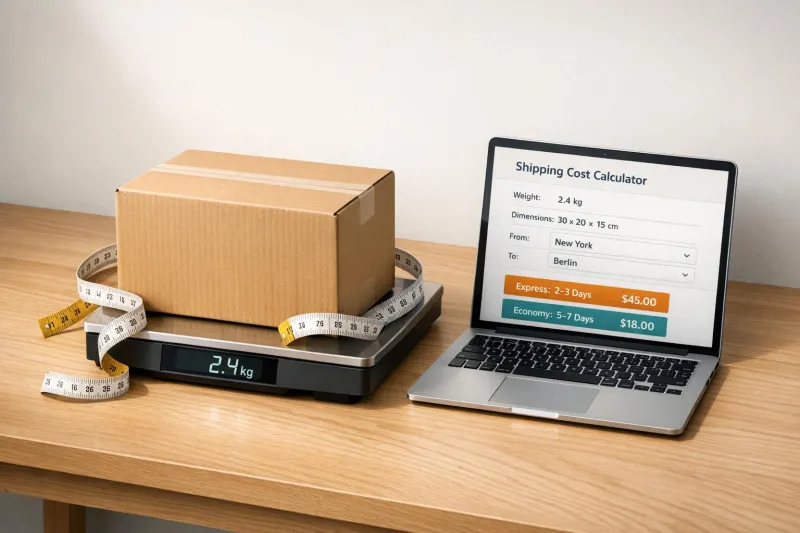
Photo: online shopping checkout shipping cost calculator on laptop, via emplicit.co
There's a moment of pure joy when you see it: FREE SHIPPING stamped next to a discounted price. No cart anxiety. No last-minute $7.99 delivery fee ruining the vibe. You click, you buy, you win.
Except sometimes you don't. Sometimes that free shipping was never free at all — it was priced in before you ever landed on the page. And in a handful of carts we ran recently, the "deal with free shipping" cost more out of pocket than the same item at full price with standard shipping added.
Let's take a crowbar to this thing.
The Cart That Proved the Point
Picture a popular countertop blender, the kind that lives in every Target run and Amazon flash sale. At one mid-size retailer, it showed up during a 48-hour event as "$89.99 — was $119.99 — FREE SHIPPING."
Sounds like a slam dunk. But the same blender was sitting at a competing store for $99.99 with a flat $4.95 standard shipping rate. Total: $104.94.
The "deal" total: $89.99... except the retailer had quietly raised its baseline price on that model weeks earlier, and the everyday price elsewhere had settled around $92–$95. Add in that the free-shipping retailer's returns required paid labels while the competitor offered free returns, and the gap gets uncomfortable fast.
The discount was real. The savings? Roughly $10–$13, not the $30 the strikethrough promised — and a chunk of that evaporated once you factored in how the shipping was being paid for.
Where the Shipping Money Actually Comes From
Retailers don't absorb freight costs out of goodwill. That money comes from somewhere, and it's usually one of three places:
- The product margin. The item's price is padded a few dollars to cover the average cost of getting a box to your door. You're paying for shipping whether the label says so or not.
- The minimum threshold. "Free shipping on orders over $35" exists because the average cart value of shoppers trying to hit that number climbs by $6–$10. You add the $8 thing you didn't need. That's the subsidy.
- The membership fee. Annual shipping programs are basically prepaying your own delivery costs in bulk — great if you order weekly, a wash if you don't.
None of this is a scam in the legal sense. It's just pricing psychology wearing a trench coat.
The Flash Sale Layer Cake
Now stack a flash sale on top. A limited-time price drop gets advertised with free shipping, and suddenly you're comparing three numbers in your head: the original price, the sale price, and the phantom shipping fee you're "saving."
Our brains treat all three as wins. The retailer knows this. Studies on checkout behavior consistently show that unexpected shipping fees are the number-one cause of cart abandonment — which is exactly why so many retailers would rather raise the product price $6 and shout "FREE SHIPPING" than charge $5.99 at checkout.
The result: a "flash deal" that's really just the regular price with the shipping invoice folded into the sticker and a countdown clock taped on top.
How to Spot a Self-Subsidizing Deal
You don't need a spreadsheet — just a two-minute routine before anything hits your cart:
- Price-check the item alone, not the offer. Search the exact model number across three or four retailers and note the everyday price. Ignore the strikethrough.
- Add shipping to both sides. Compare (sale price + $0) against (competitor price + their shipping fee). Sometimes the fee side wins.
- Check the return policy before checkout. A $10 savings means nothing if a return costs you $12 in labels.
- Do the threshold math. If you're adding a filler item to unlock free shipping, ask whether that item would've been bought anyway. If not, you just paid $8 to save $6.
- Watch for price creep on "was" prices. Some retailers quietly lift the reference price a week or two before a big event so the discount looks deeper. Browser extensions and price-history tools make this visible in seconds.
When Free Shipping Actually Is a Win
To be fair, this isn't a conspiracy — sometimes the numbers genuinely break your way. Big-box retailers with their own logistics networks move enough volume that real free shipping on real discounts happens all the time, especially during major sale events when margins get cut to the bone on purpose.
The trick is knowing which one you're looking at. Free shipping on a genuinely discounted item from a high-volume retailer? Take it. Free shipping on a price that's mysteriously higher than the same item elsewhere? You're just paying for the truck in a different line item.
The Bottom Line
Shipping isn't a gift. It's a cost, and every cost eventually lands in someone's cart. The only question is whether you see it on the label or find it hiding in the price.
Ten seconds of comparison shopping turns "FREE SHIPPING" from a magic spell back into what it always was: a line item with good PR. Your wallet will notice the difference — even if the countdown clock hopes you won't.