Struck Through and Sold: Who Decides What That 'Original' Price Ever Was?
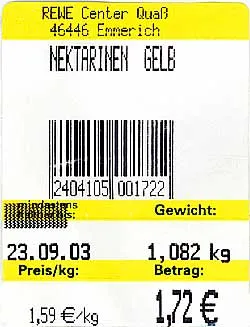
Photo: REWE, Public domain, via Wikimedia Commons
You've seen it a thousand times. A sleek blender, normally $199, now $79. Your brain does the math before you even finish reading: that's 60% off. Sixty percent! You add to cart.
Here's the uncomfortable question almost nobody asks while the deal adrenaline is flowing: was it ever actually $199?
The Phantom Original Price
In the retail world, that crossed-out number has a name: reference pricing. It's the anchor price a retailer displays to make the current price look like a steal. And the dirty little secret of American retail is that the anchor is often fictional — a number the item rarely, if ever, sold for.
I talked with Dana (not her real name), who spent six years as a pricing analyst for a mid-size home goods chain before burning out and switching careers. Her team had a term for it: "aspirational pricing."
"We'd price something at $189 knowing full well it would launch at $94," she told me. "The $189 wasn't a lie, exactly. It was a price. We just never expected anyone to pay it. Sometimes the item would go live at the sale price on day one. The 'original' price existed in our system for maybe a week before the item even hit shelves."
That's the game. The strikethrough isn't a record of what you're saving. It's a suggestion of what you could have paid — in a universe where someone, somewhere, once clicked buy at full freight.
Is That Even Legal?
Short answer: it's a gray zone, and enforcement is spotty.
The FTC's guides against deceptive pricing say a reference price should reflect a genuine, recent, and substantial volume of sales at that price — what regulators call an "advertising basis." The classic standard retailers cite is the former FTC practice of looking for sales at the higher price in the recent past, often in the same store or market area.
But here's the catch: the FTC's pricing guides were withdrawn as binding rules in the 1990s and are now advisory. Enforcement mostly happens state by state, through consumer protection laws, or in class-action lawsuits after the fact. In 2015, several major retailers got hit with suits over "was" prices that didn't hold up, and some settled. Others changed nothing meaningful.
"The practical reality," Dana said, "is that the risk of a lawsuit is cheaper than the revenue from a 60%-off banner. The math almost always favors the retailer."
A few states, like California, have been more aggressive — retailers there have faced penalties under statutes requiring that former-price claims be truthful. But most shoppers in most states are on their own.
How to Check If a Deal Is Actually a Deal
The good news: you don't need a law degree or a countdown timer to fight back. You need a price history.
1. Use a price tracker before you buy. Tools like CamelCamelCamel (for Amazon), Keepa, or Honey's price history feature show you what an item has actually sold for over weeks or months. If that $79 "flash deal" has been $79 for four months straight, congratulations — you've found the real price. The strikethrough was theater.
2. Look at the trend, not the discount. A deal is a deal when the current price is genuinely below the item's recent typical range. A 60% discount off an inflated anchor can still be more expensive than the item's average selling price. The percentage off is marketing; the price history is fact.
3. Watch the calendar, not the clock. Big anchor-price games spike around tentpole events — Prime Day, Black Friday, back-to-school. Retailers know shoppers are primed to see discounts, so "original" prices get extra creative. If a deal only appears during a shopping holiday, check whether the price dropped at all compared to the week before.
4. Search the model number, not the product name. Retailers sometimes run "exclusive" model variants — a TV or appliance with a slightly different model number that exists only at one store, making price comparison nearly impossible. No competitor pricing means no honest anchor. If you can't comparison shop it, be extra skeptical of the strikethrough.
5. Screenshot before big purchases. If you're spending real money, capture the listing with the price and date. If the price drops days later or the "deal" turns out to be a mirage, you've got receipts — literally — for a price-match request or a return window argument.
The 60-Second Rule
Dana's advice to everyday shoppers is simple: give every big strikethrough one minute of skepticism before checkout.
"Sixty seconds," she said. "Open a price tracker, check the model number, look at the trend. If the deal survives that minute, buy it and feel good. If it doesn't, you just saved yourself from a discount that never existed."
That's the whole trick. Countdown timers and slashed percentages are designed to short-circuit exactly that pause. The strikethrough works because you don't check it.
So check it. The real price was always one search away — and unlike that $199, it doesn't disappear when the timer runs out.